
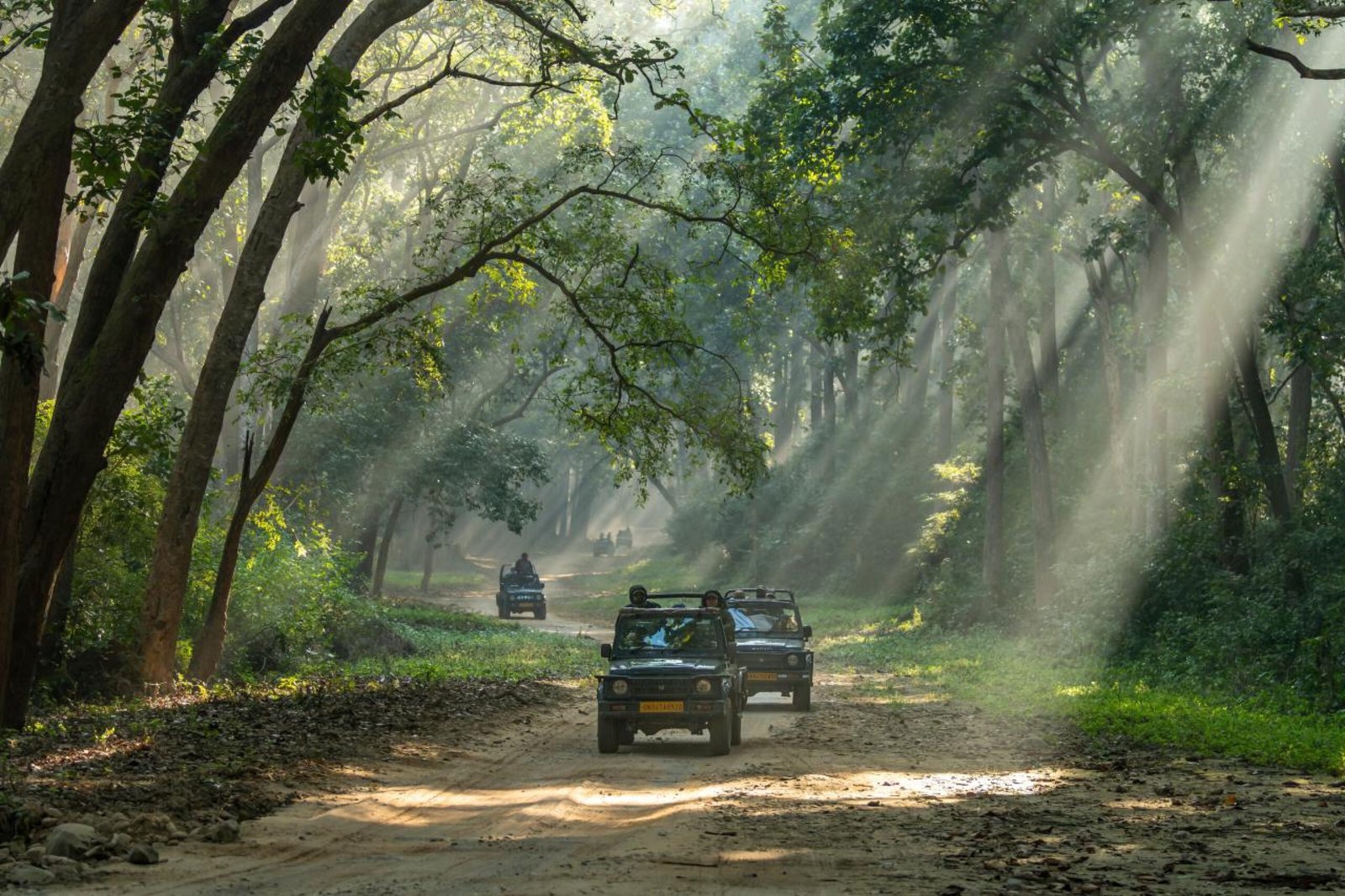
India Tiger Safari for First-Time International Visitors
Most people arrive at their first Indian tiger safari with the wrong film playing in their head. Usually it’s an African one: a flat golden plain, a lion under an acacia, a vehicle that stops wherever it likes.
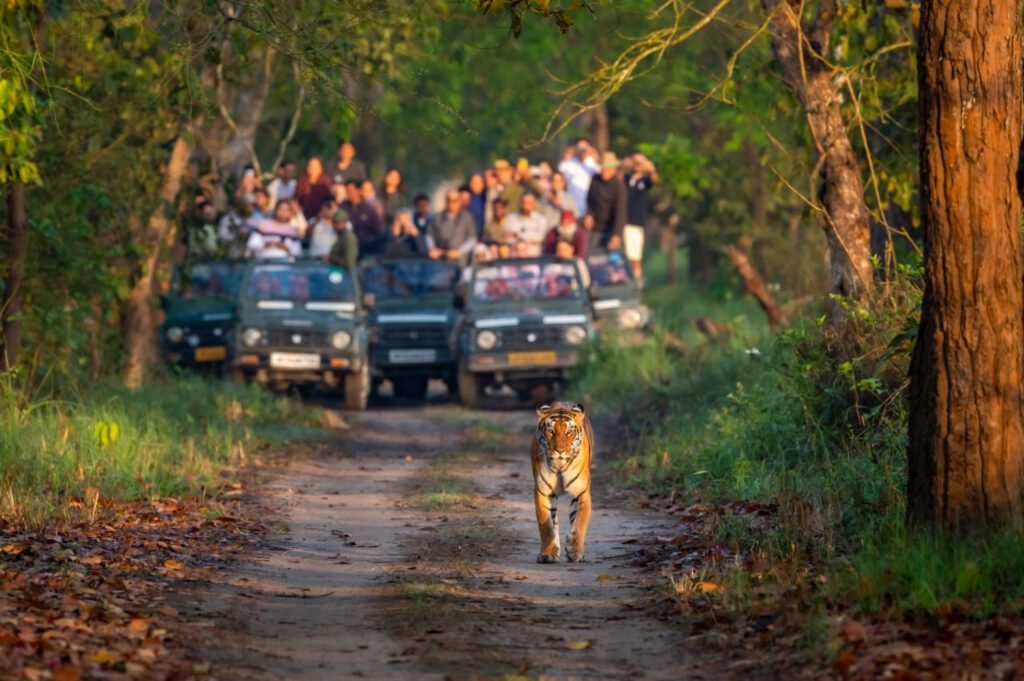
India is not that. India is thick jungle, shrouded paths you cannot escape from, a government-approved guide and the creature that has spent its evolutionary existence purposely invisible. When, twenty metres ahead of you a tiger does emerge from the forest and step out onto the road, it will be the most magnificent thing you’ve seen all year, precisely because those forests have made you labour for it so.
This guide is about what that experience is like, hour by hour. If you’re still at the stage of picking dates, booking permits and sorting your visa, start with our full planning guide instead. This one assumes the trip is happening and you want to know what you’ve signed up for.
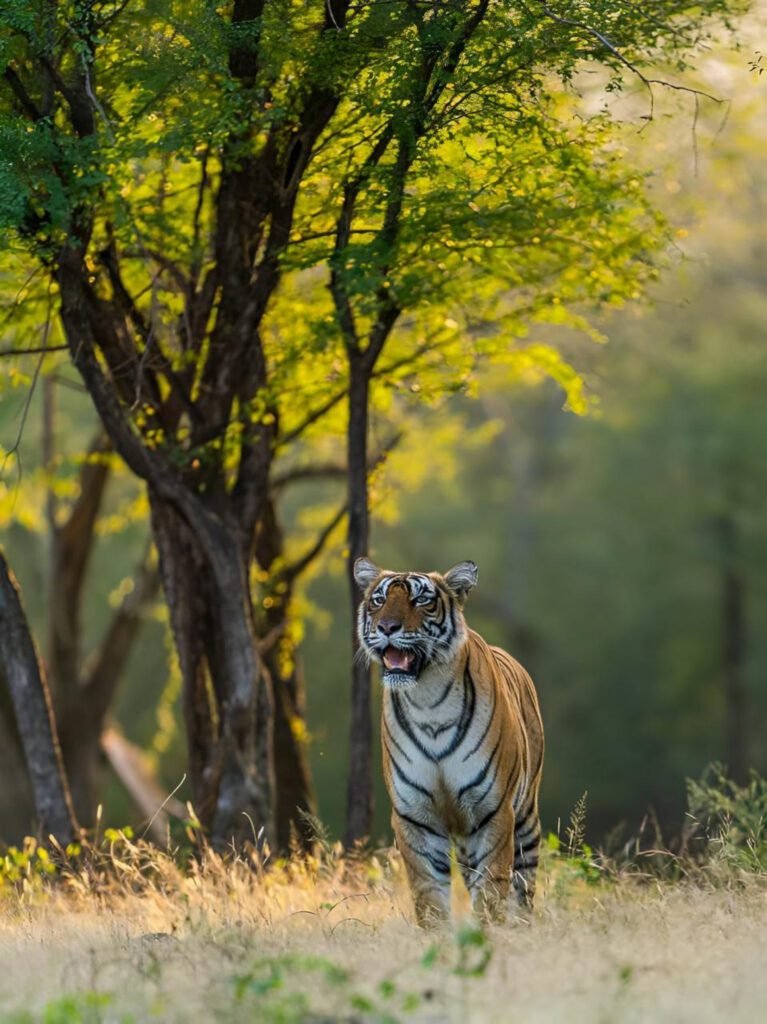
Table of Contents
First, understand what an Indian tiger reserve is
India contains majority of the world’s last wild tigers. Nationally about 3,682 tigers were estimated in the 2022 All India Tiger Estimation across 58 tiger reserves covering three-fourths of global numbers while the sixth cycle of national census initiated in January,2026 is likely to have its final report released by 2027.
Those numbers sound enormous. They are also spread across an area larger than several European countries combined, in forest thick enough to hide a tiger at fifteen metres.
Three features of the Indian system will shape your entire trip:
- Only a fraction of each reserve is open to tourism. Take Ranthambore, for instance, where nearly one-fifth of the park is allocated to tourism and divided into ten zones. The rest is left alone. That’s deliberate, and it’s a large part of why the tigers are still there.
- Vehicle numbers are capped by law. A fixed number of jeeps enter each zone per shift. You cannot buy your way past this, and no operator can add a vehicle for you.
- Every drive is government-supervised. Your safari vehicle carries a forest department guide alongside your driver. The guide’s word is final on where you go and how long you stay. This is not a formality.
The practical conclusion: you are visiting a working conservation area not a wildlife park. Once that clicks, everything else about the experience falls into place.
What a safari day actually looks like
Nobody tells first-timers how early it starts, or how much of the day is spent not on safari. Here’s the real rhythm.
- Around 5:00 AM, someone knocks on your door with tea and biscuits. It is dark. In December and January, it is also properly cold, single digits Celsius in central India.
- By 5:45, you’re in an open jeep heading for the gate. This drive is often ten to twenty minutes on a public road, and it is the coldest part of the day, because you’re doing forty kilometres an hour in open air before sunrise.
- At the gate, there’s a queue, paperwork, and passports being checked against the permit. Gates open at sunrise and timings shift through the season. You want to be there thirty minutes early.
- For the next three to four hours, you’re in the forest. You’ll stop for alarm calls, pugmarks in the dust, langurs, deer, birds, and long stretches of nothing at all. There’s usually a designated break point where you can get out, stretch, and use a basic toilet.
- By 10:00 or 11:00, you’re back at the lodge for a substantial brunch and, if you have any sense, a nap. The middle of the day is dead time by design: it is hot, animals are resting, and the park is closed to tourism between shifts.
- At 2:30 or 3:00 PM, you go again. The afternoon drive runs until sunset, and being inside the park as the light goes gold is often the most beautiful part of the day even if you see nothing with stripes.
- By 7:00 PM, you’re back for a hot shower, a drink, and dinner. Most lodges do a naturalist talk or a sightings recap. By 9:30 most guests are asleep, because it starts again in seven and a half hours.
Two drives a day, three or four hours each. Between them, you rest. A safari trip is not a busy holiday, and travellers who arrive expecting to sightsee in the gaps end up exhausted.

The honest truth about tiger sightings
Here’s the thing every good guide will tell you on day one and no marketing page will: sightings are not guaranteed. Tigers are wild animals with minds of their own, and no operator can promise you one.
What you can do is stack the odds. Book six or more drives across at least two reserves. Travel in the drier months when water sources concentrate the wildlife. Book the whole vehicle so you control how long you wait. And take the guide’s advice about where to sit and when to be silent.
What most first-timers get wrong is treating a drive without a tiger as a failed drive. On a typical five-day, ten-drive trip in a good reserve, you might have three or four tiger encounters, some of them thirty seconds long. The other six drives are where you’ll see:
- Leopard, sloth bear, dhole, jackal, hyena and jungle cat, depending on the reserve
- Gaur, sambar, chital, barasingha in Kanha, nilgai, wild boar
- Two hundred to three hundred bird species, including several that birders fly in specifically for
- Mugger crocodiles, monitor lizards, and if you’re lucky, a python
And the thing that surprises people most: the forest itself. Mist sitting in the valleys of a sal forest at 6:30 AM can redeem the airfare.
The happiest travellers home are unquestionably the ones that came for the forest and took the tiger as a bonus.
Learning to read a sighting
Within two drives you’ll start understanding the language of the forest, and this is genuinely one of the great pleasures of an Indian safari.
Alarm calls are the main tool. A chital’s sharp bark, a langur’s cough from a high branch, a sambar’s deep bell. Each means a predator is moving. Your guide will place the call, judge the direction, and reposition.
Pugmarks tell you who passed, roughly when, and which way. A fresh male print in soft dust is a very good sign.
The waiting game is where most tigers are actually seen. Your driver will park at a water crossing or a junction and switch off the engine, and you’ll sit for forty minutes in silence. This feels like nothing is happening. It is the single most productive thing you will do all morning.
And sometimes nothing happens at all, the calls fade, and you move on. That’s the deal.
Vehicles, and why the choice matters
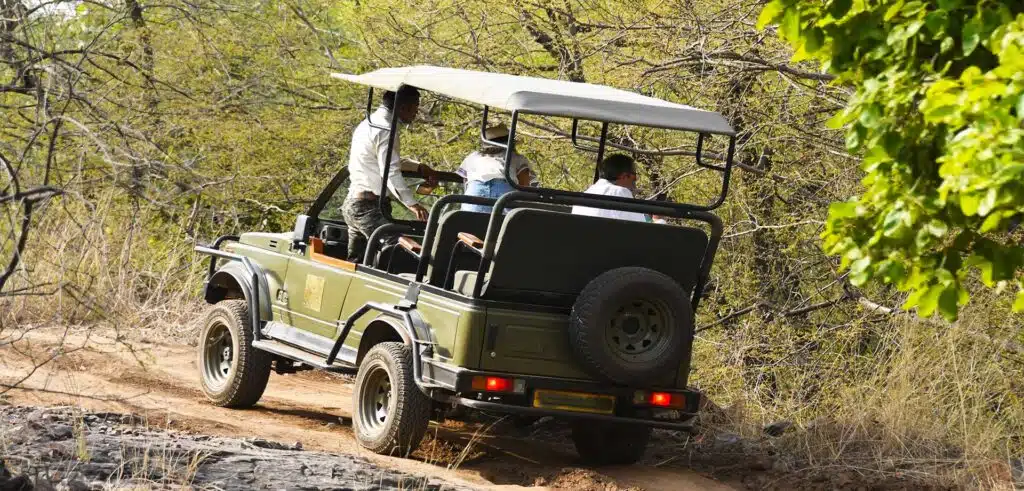
Most reserves run open 4×4 Maruti Gypsies. They seat six passengers plus driver and guide, they have no roof, no doors worth mentioning, and no suspension worth praising. Some reserves also run canters, twenty-seat open buses that are cheaper and considerably less intimate.
You can book a single seat in a shared gypsy or reserve the whole vehicle. For a first trip, take the whole vehicle if your budget allows. Two reasons. First, you decide whether to wait at a waterhole or move on, which is the decision that determines your sightings. Second, six strangers with six different priorities and one person who won’t stop talking can genuinely spoil a morning.
If you’re travelling as a pair, a full jeep also means room to move for photography rather than shooting over someone’s shoulder.
Where you’ll stay, and what “jungle lodge” means
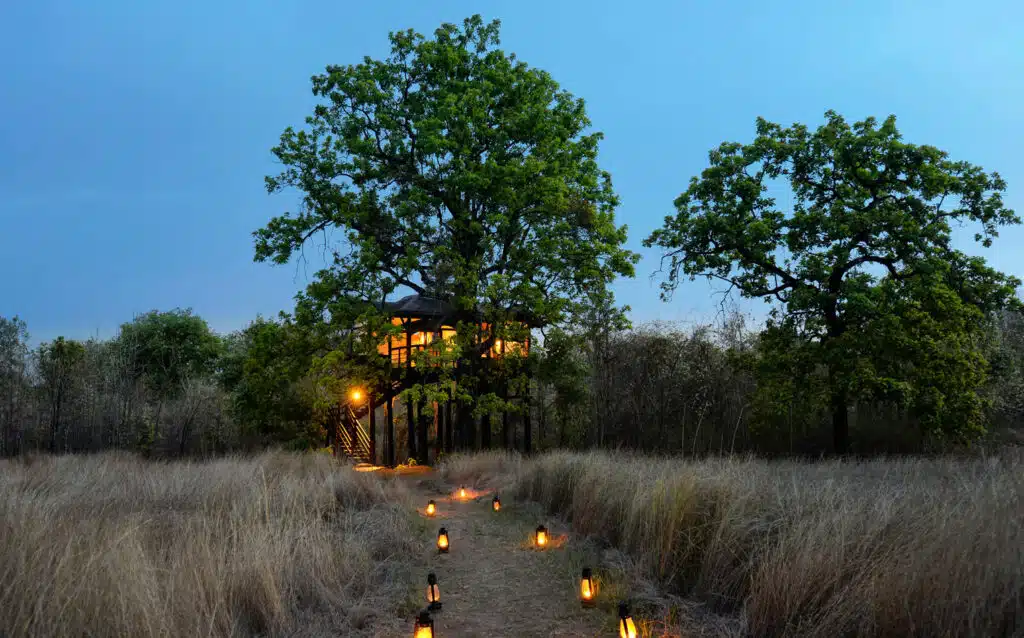
You won’t be staying in a city hotel. Accommodation near Indian tiger reserves ranges from simple forest rest houses to some genuinely world-class conservation lodges, and almost all of them run on full board because there’s nowhere else to eat.
What to expect:
- Food is generally excellent, mostly Indian with continental options, and dietary requirements are handled well if you flag them at booking. Foodie Travellers eat extraordinarily well in India.
- Power can be intermittent. Most lodges run generators for backups. Bringing a power bank is advisable.
- Wi-Fi exists at most properties and speed is improving with time at nearly all of them. Mobile signal near park gates is patchy. Treat this as a feature.
- Hot water in most cases is solar-heated, so it is abundant after 10 AM and of dubious value at 5 AM. Shower after the morning drive, not before.
- Naturalists. The best lodges employ resident naturalists who join your drives. This makes a bigger difference to your trip than thread count does. Ask your travel advisor to include one.
The rules, and why they exist
These are not suggestions and breaking them can end your safari.
Stay in the vehicle unless your guide tells you otherwise.
Don’t stand up during a sighting.
Keep your voice down and your phone silent.
No feeding, ever.
No getting out for a better photo.
No plastic bottles or wrappers left behind.
No drones.
Opt for muted, more earthy colours such as greens, browns and greys; bright colours, white & camouflage print (not allowed in some areas) should be avoided.
And this is arguably the most important unspoken rule that differentiates good visitors from bad: Don’t push your driver. Not to go faster, not to get closer, not to push past another vehicle at a sighting.
Rewards / Tips are appreciated well but tip for good behaviour, not for aggression.
If a sighting gets crowded, the guide may pull you back. Let them. The tiger has to live there after you’ve flown home.

The questions first-timers actually ask
Is it safe?
Yes. Tiger’s read a jeep as one large, boring object / animal (only tiger knows), that is why attacks on safari vehicles are vanishingly rare.
How fit do I need to be?
Not very. It’s a seated activity. It requires an acceptance of early mornings, four hours without a proper toilet and continuous bouncing along rough tracks. If you have back problems, mention it when reserving and request a front seat.
What about the cold?
Underestimated by nearly everyone. From November to February, the dawn temperatures in central India can be between 4°C and 10°C and you’ll be driving through that with no roof over your head. Lodges will offer blankets and hot water bottles. Even so, take a fleece, a more windproof layer, gloves and a hat.
And the heat?
From March onwards it climbs steeply, past 40°C by May. Morning drives stay manageable. Afternoon drives in peak summer are hard work, and this is the season to prioritise a good hat and serious hydration.
Are toilets available?
There’s usually one basic facility at a designated break point mid-drive. Plan accordingly and go easy on the morning tea.
Can I bring children?
Yes, and many lodges are excellent with families. Children under five are typically allowed in the jeep without a separate seat. Be realistic though: a four-hour silent drive at dawn asks a lot of a young child.
What if my partner isn’t a wildlife person?
Several reserves offer alternatives. Satpura has walking safaris and canoeing. Ranthambore has a spectacular fort. Most lodges arrange village walks, birding trails and cooking sessions. A non-birding partner does not have to do ten drives.
Do I need a professional camera?
No. Bring binoculars, which most people forget and everyone wishes they’d brought. If you are shooting, a 100–400mm zoom and a bean bag will serve you better than a bigger body. Note that some parks levy a separate camera fee for professional equipment.
How much cash should I carry?
Cards work at lodges but not for tips, village purchases or roadside stops. Carry ₹10,000–15,000 in small notes. Budget ₹500–1,000 per drive for the driver and guide, and may contribute to the lodge tip box at checkout, which is usually shared among staff.
Small things that make a big difference
Do the same zone twice. First-timers want variety. Experienced travellers repeat a zone because on the second visit they know the terrain, the guide knows what’s been moving, and they recognise the calls.
Sit still. Constant shifting, camera-raising and repositioning is what most often turns a distant tiger away. Guides notice which vehicles are calm.
Take a drive off from photography. Watch one sighting through binoculars, or with your own eyes, and it will stay with you longer than the frames will.
Talk to your guide between sightings. These are people who have spent years in one forest or the same jungle that connects the national park.
Ask about specific tigers, territories, which cubs survived. The reserves have genuine soap operas running, and knowing the cast transforms a sighting from “a tiger” into “her.”
Don’t over-schedule your last day. Leave a buffer before your flight. Rural roads to Jabalpur, Nagpur or Jaipur do not care about your itinerary.
Frequently asked questions
What are my chances of seeing a tiger in India?
Reserves like Bandhavgarh, Ranthambore, Tadoba and Kanha offer some of the best odds in the world, particularly in the dry months from March to June. Across six or more drives in a good reserve, most visitors get at least one sighting, but no reserve or operator can guarantee it.
How many days should a first-time visitor spend on safari?
Plan a minimum of three nights per reserve, which gives you five or six drives, and ideally visit two reserves. Anything shorter turns your holiday into a series of transfers.
Is a tiger safari in India suitable for older travellers?
Yes. The activity is seated and lodges are comfortable. The demanding parts are the early starts and the rough tracks, both manageable with a front seat and one drive a day rather than two.
Do I need to speak Hindi?
No. Guides, naturalists and lodge staff at properties serving international visitors speak English.
What should I wear on safari?
Muted greens, browns, khaki and grey, in layers. Bright colours and white stand out badly, and camouflage print is restricted in some areas.
Can I get out of the vehicle?
Only at designated points and only when your guide says so. Some reserves, notably Satpura, offer guided walking safaris as a separate, permitted activity.
Is photography allowed?
Yes, though some parks charge separately for professional equipment, and drones are prohibited everywhere.
Before you go
The difference between a good first safari and a great one usually isn’t the reserve, the season, or the lodge. It’s expectation.
Come knowing that you’ll spend more hours not seeing a tiger than seeing one. Come knowing that the forest is the point and the tiger is the reward. Learn two alarm calls, watch what the langurs are watching, and sit still. Then, one morning, the whole forest will go quiet at once, and you’ll understand exactly why people fly halfway around the world to sit in a cold jeep at dawn.