
Navigate the Article
Tiny Paws. Giant Legacy.
From blind, vulnerable cub deep inside a den; dependent on mother — is hard to imagine how something unbelievable becomes the roar of the forest as a tiger.
The best safari experience is seeing tiger cubs in the wild. The woods are silent for a split second. Next, a striped little head peeks out from behind some tall grass followed by another, and then another. They play, stalk, wrestle, trip over each other’s claws and in that little mayhem is the future of wild tigers in India.
As per the 2022 All India Tiger Estimation, there are around 3,682 tigers in the world, and India is home to about two-thirds of that number. And every tiger cub remains an example of both a spectacular sighting and conservation victory.
The Hidden Beginning: Where Tiger Cubs Are Born
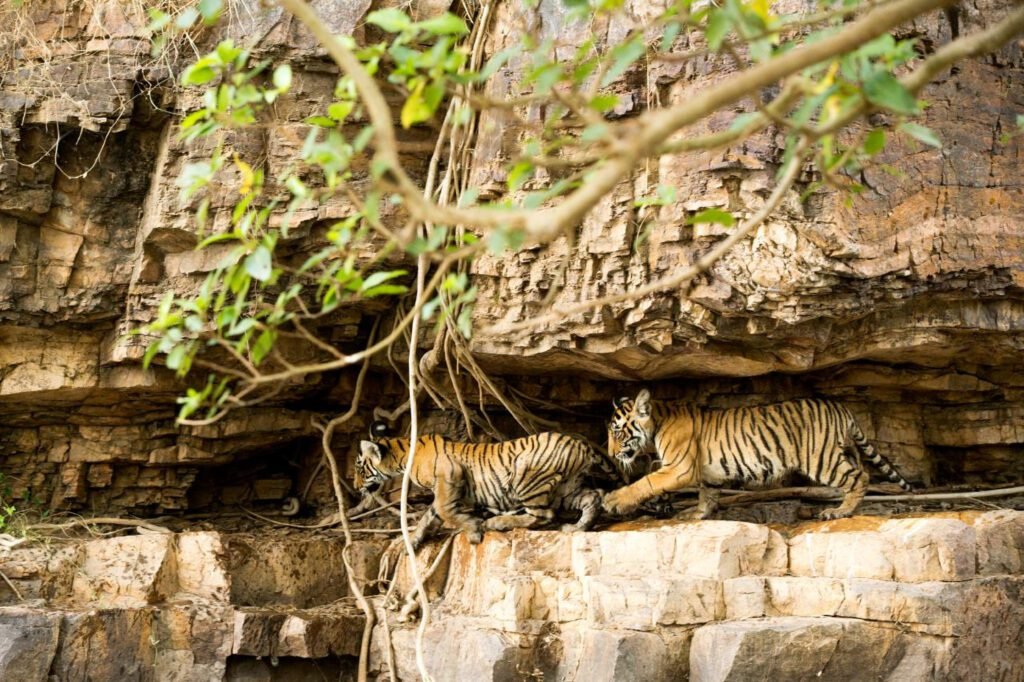
A tigress will not birth her cubs out in the open. Through searching cover, safety, and food she seeks a place to give her new cubs. It could be a cave, a dense thicket, a rock overhang or simply some undisturbed niche in the forest away from human activity.
Gestation lasts approximately three and a half months and litters average 2 to 4 cubs (but may number more). When tiger cubs are born, they are completely dependent on their mother and are born blind or helpless. They typically open their eyes between six and twelve days, but do not obtain clear vision until a few weeks later.
The first few weeks, the den is their whole world. The Tigress is quiet, secretive and very territorial. Her life is reduced to three tasks: eating, raising her cubs, getting back to safety before the worst happens.
Every tiger begins as a secret the forest must protect.
The Tigress: Mother, Guard, Teacher, Hunter
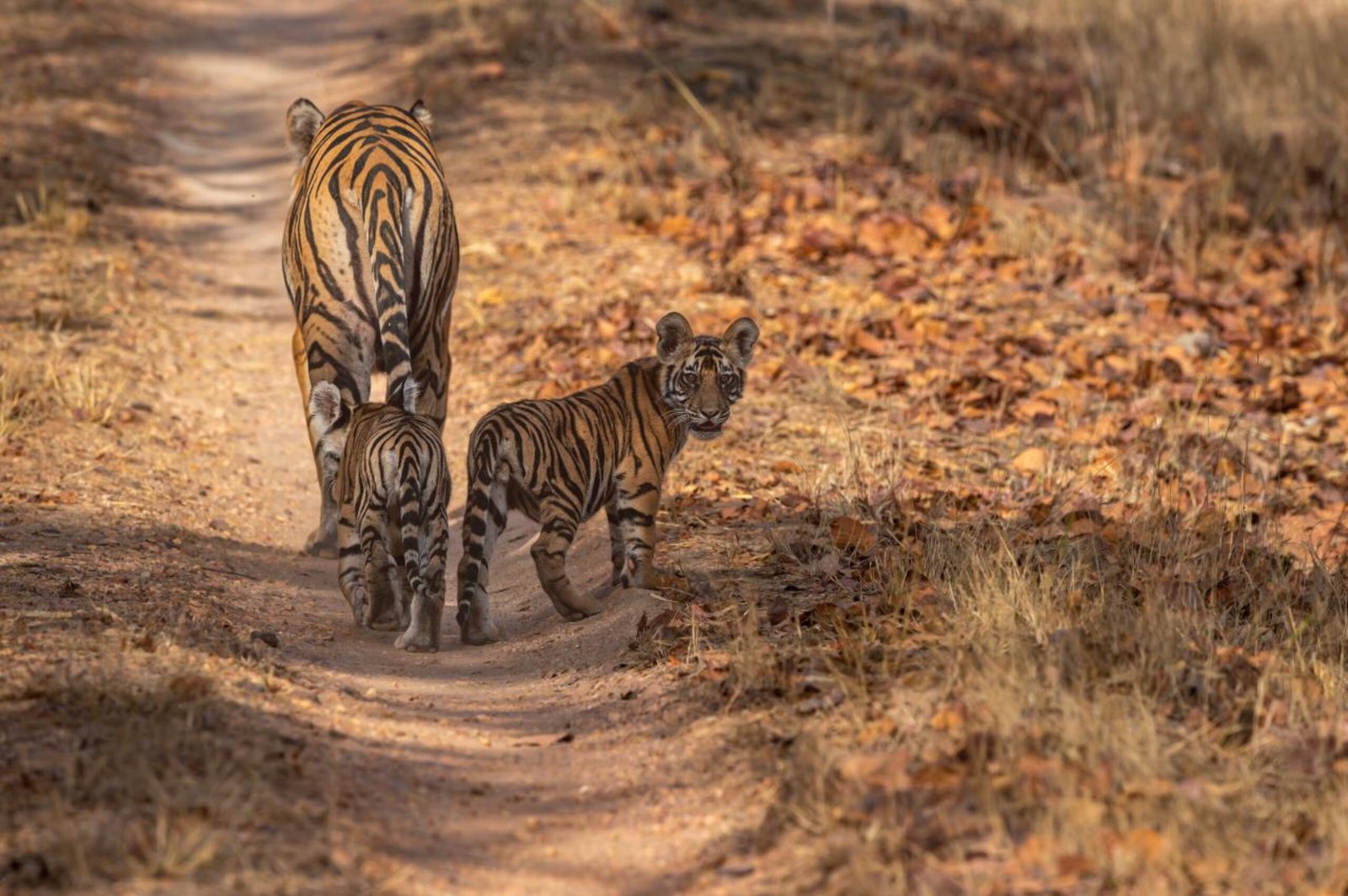
A tigress represents everything to her cubs in the wild.
She grooms them, and cuddles them to keep warm, licks through the dirt to remove anything that could cover her young ones up. If she senses danger comes close, she moves them. If a den becomes perilous, she transports every single cub to safety in another hiding spot, one by one. This constant movement is not restlessness — it is adaptation.
The cubs are under the care of the mother alone for the first few months. She only leaves them for short periods of time to hunt or drink. Nursing tigresses need to eat a lot more to make milk and take care of themselves.
Her most challenging time is raising cubs and to do this she must learn some things including avoid intra-species fights, protect her cubs from leopards and wild dogs, sloth bears and male tigers which terrorize them for territory as well flooding of the forests or fires in their habitats all while facing human encroachment on her land.
The tiger cub may appear happy and carefree, but behind its survival is a mother with boundless patience & precision.
From Milk to Meat: The First Taste of the Wild
The tiger cubs start by drinking milk, but the forest will slowly accustom them to the practice of eating meat.
Cubs start eating food between 6 to 8 weeks of age but remain very dependent on the mother. By this stage, a tigress may even lead them to a kill, so they get to smell it, lick it and pull at its carcass before they begin figuring out what food is in the wild.
This is not a neat lesson. It is messy, instinctive, and full of curiosity.
A cub might sniff as it paws at the carcass or gnaw awkwardly with its new teeth and compete for prime anatomy among littermates. These initial feeding experiences teach more than hunger. They expose cubs to scent, strength and hierarchy and the awareness that in the forest every meal is earned.
Play Is Their First Training Ground
To visitors, the sight of tiger cubs playing is delightful; to the forest it is deadly training.
Cub exercises in play fighting — rolling, pouncing, biting and chasing or ambushing their older kin. They teach balance, timing, stalking, confidence and coordination through their games. At about four months cubs are nearly the length of a medium-sized dog, and spend much of their time wrestling and pouncing with the siblings.
It is here that jungle’s future hunters do rehearsal.
Today a friendly tap, tomorrow a composed hit.
Incompetent pursuit today, silent stalking tomorrow.
A battle with siblings today will become a battle with survival skills tomorrow.
In the wild, play is something more than play ever is.
Learning to Hunt: The Long Road to Independence
Tiger cubs are not born hunters.
Cubs do not hunt in the early weeks but may follow their mother from the den when they are about two months old. They remain concealed as she looks for a victim. Over the next eight to ten months, they begin following their mother and siblings more actively during hunting lessons.
The tigress leads by example. She does not teach (as a human would teach). She demonstrates. Cubs observe her ambulation, how she waits, listens, crouches, selects cover and closes the distance to a kill.
Gradually they start copying her.
At first, they fail often. They misjudge distance. They move too early. They get distracted. Yet each attempt that fails hones instinct into skill. This is their classroom, the forest and their teacher — just Mum.
The Sibling Bond: A Temporary Family in a Solitary World
Tigers are solitary animals as adults but are born into an extreme nuclear family.
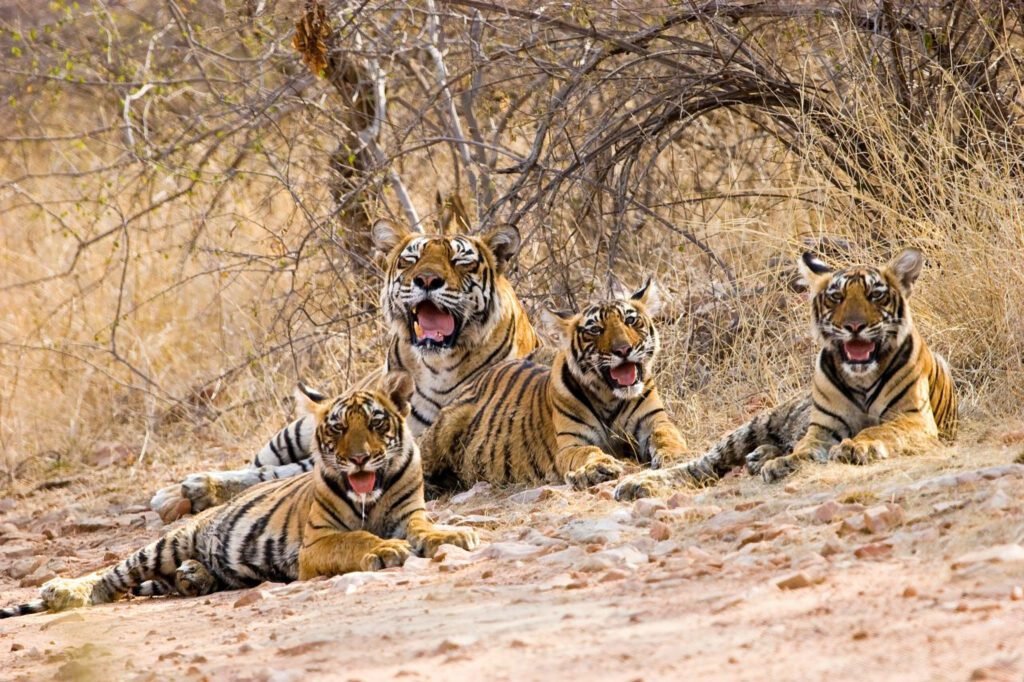
Siblings live, sleep, play and learn together. Generally, a hierarchy is formed where one cub being more dominant at feeding or playing time. This preliminary social structure decreases opposition and primes little ones for life in the savage competition ahead.
But this bond is temporary.
Tigers do not have a permanent family structure. The intimacy of cubhood fades as bellies empty, courage swells and territorial instincts awaken.
The cubs that used to sleep next to one another eventually need to go their own ways.
When Tiger Cubs Leave Their Mother
Cubs remain with their mother until they can successfully hunt and that is generally 18 to 24 months old. They gain more independence from two to three years, at which time they leave home to cut out territories for themselves. Young females often stay close to their mother; young males disperse over greater distances.
This stage is dangerous.
A tiger cub that leaves its mother is a powerful but inexperienced animal. It means avoiding dominant adults, finding prey, crossing perches, and spending time traveling on new terrain and in some cases even crossing human inhabited areas. For juvenile males, dispersal means cover tens or hundreds of kilometers over forests, farmland, corridors and conflict zones.
At first, independence is not becoming free. It is a test.
Why Tiger Cubs Matter for Indian Forests
A tiger cub is more than a baby animal. It is a sign that the forest is still functioning.
Any land can offer prey, shelter, water and space but it needs all of them to provide a relatively safe environment for tigress to rear cubs. Almost always, a healthy tiger population is an indicator for a healthy ecosystem. Being apex predators and keystone species, tigers need protection because conservation of this magnificent wild animal boosts the entire balance of herbivores, carnivores, forests and habitats.
So, on safari, tiger cub sightings mean so much. They are not mere “cutesy moments” for the cameras. They are proof of continuity.
A cub means the story is still being written.
Responsible Safari Etiquette Around Tiger Cubs
The sight of wild tiger cubs is a lifetime memory, but it also means responsibility.
Safari guests should be quiet, avoid sudden movement, never rush guides or drivers to get too close and give enough space for the tigress to feel safe. They are sensitive to disturbance, as a tigress may move her cubs or avoid certain areas when contacted.
The best wildlife experience is not the closest one. It is the one where the animal remains undisturbed.
Final Roar: The Future Walks on Small Paws
Tiger cubs teach us that nature’s strongest creatures start life from helplessness.
They arrive blind, hidden and sensitive. Because of their mother’s fierce protectiveness, the forest’s bounty and the protection of wild spaces, they survive. Each cub that survives to maturity passes on not just its maternal lineage but also the future of all of India’s forests.
So, the next time you are on a safari and spot a cub, refrain from pulling out your camera first.
Because what you are looking at is not just a baby tiger.
You are now witnessing the next jungle roar.