
Top 10 Tiger Photography Tips
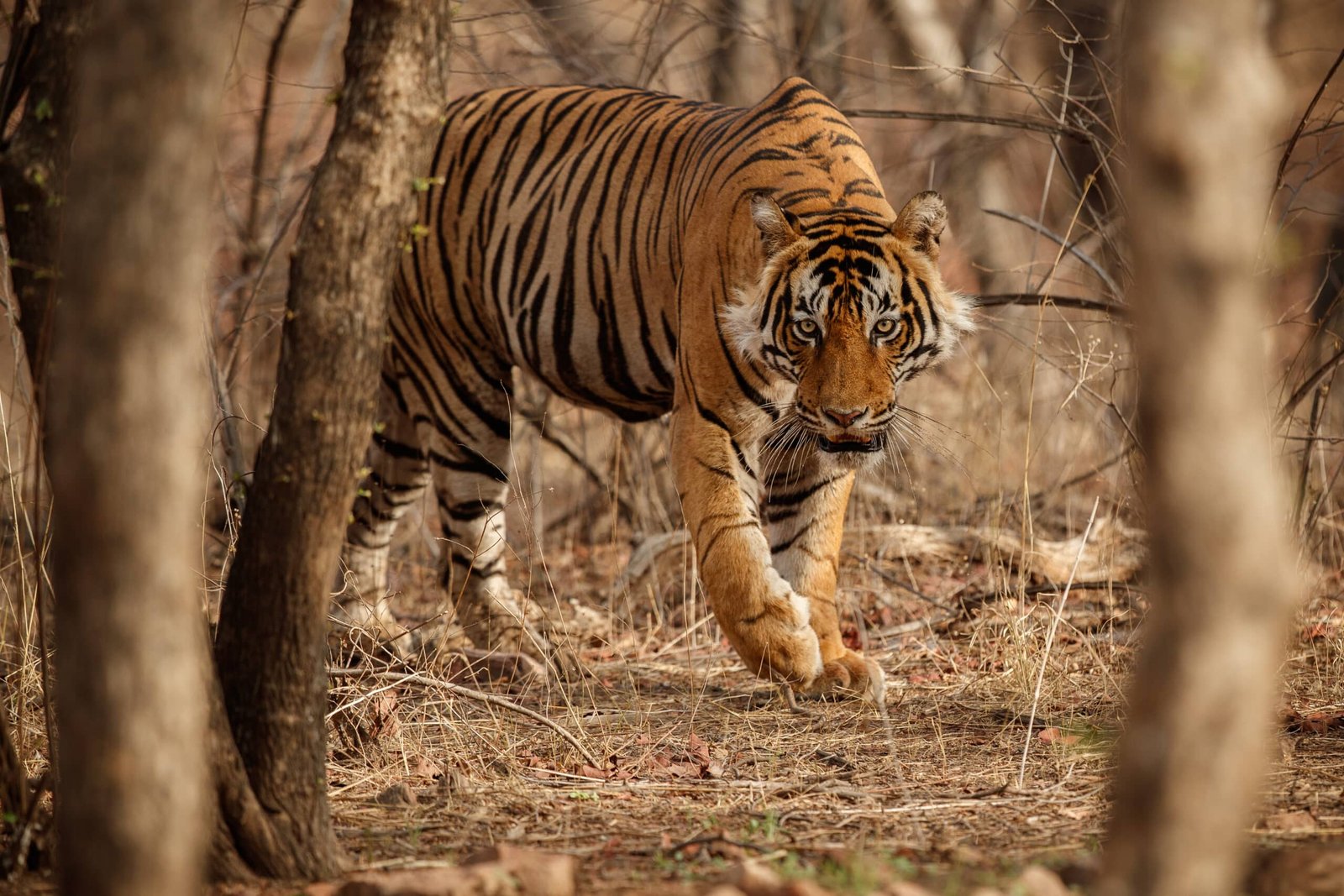
On every tiger safari in India there is a moment when the forest falls still; the gray-bearded langur on his mahua tree stops munching through his mid-morning snack; a chital somewhere lets out a cluck of warning; and then, from under the mottled shade beneath the mottled teak trees, a pair of amber eyes scores another mark into the story of stripes. It’s a heartbeat for photographers, where preparation dances with intuition, and the space between “I saw a tiger” and “I made a photograph” is counted in shutter clicks and silence.
The aim of this guide is simple – Provide some tried and tested, real world tiger photography tips that carry across the forests from Ranthambore’s ramparts to Kanha’s plains and Tadoba’s bamboo, so every safari delivers stronger images and richer memories. We’ve gathered 10 tips to help you get that perfect shot that makes the heart melt and race at the same time.
Table of Contents
Master the light, master the stripes
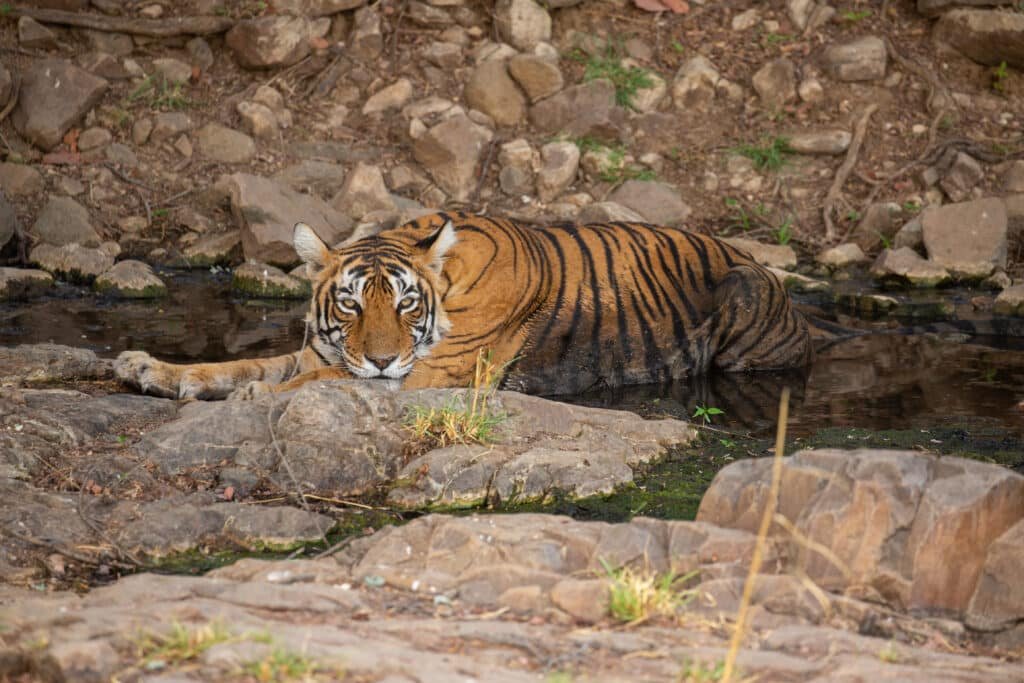
Tigers are crepuscular; the best action frequently occurs at dawn and dusk, when light is low and golden, which means fast, clean files require wide apertures and assured ISO choices to preserve sharpness without worrying about grain. Don’t shoot slower than 1/1000s for moving subjects in that first and last hour, Auto ISO and aperture priority or manual with auto ISO will help keep your exposure consistent as the canopy shadows move overhead. By late morning, when heat starts to gather in earnest, backlighting can rim the stripes with fire, expose for highlights, and use the road’s pale dust as a natural reflector to lift shadows without flash.
Shutter speeds that save the day
Wildlife pros use the following guidelines for a speed anchor: 1/1000s when wildlife is on the move; stepping up to 1/2500s to freeze high action plus water splashing if it’s occurring on your subject, or even 1/4000s if something suddenly erupts then adjusting for aperture and ISO as needed. Another guideline is to match the minimum speed to roughly double the focal length in inverse seconds and lessen shake just in case stabilization fights itself on a bouncing jeep.
Or you could explore a more creative motion blur; panning at 1/30-1/10s can transform a walking tiger into a streak of poetry. Practice on cars or deer first and only commit when the movement is regular and the background tells a single story.
Gear that earns its seat in the jeep
Keep it simple and strong: two bodies, two general ranges (say a 400–600mm to step up for the headshots or more distant frames, & a 70–200mm for wider things and closer approaches where context counts). While some Indian parks can seem bone-dry one moment and monsoon-weepy the next, be sure to pack extra batteries, fast cards, lens cloths and dust covers/rain sleeves, no tripods in the jeeps but beanbags and monopods work well.
Every time that gear shuffle can be minimized means fewer missed frames and less likelihood of gunk on the sensor, so try to avoid mid-safari lens swaps, and rely upon teleconverters to extend reach without exposing the chamber.
Composition that breathes with the forest
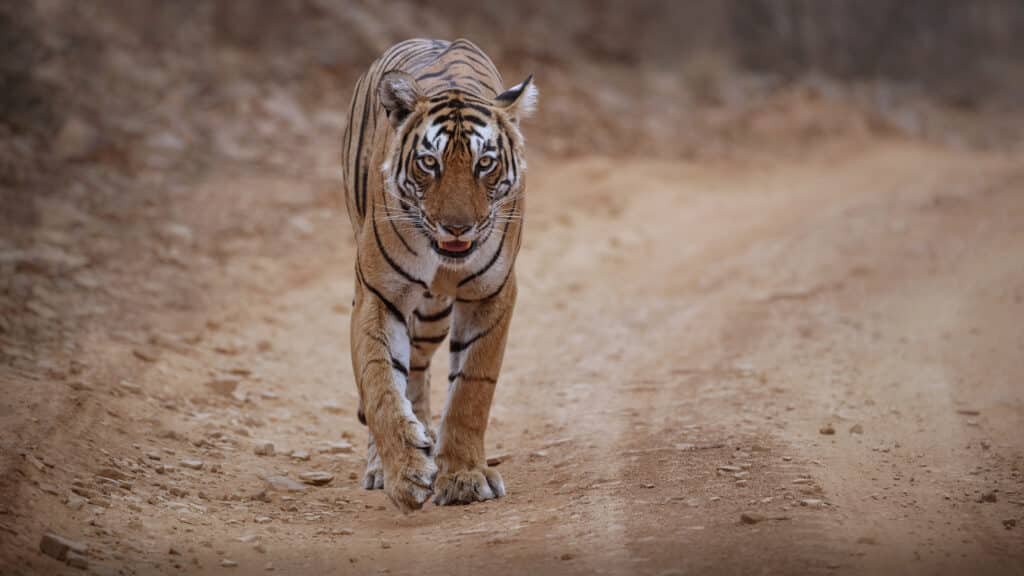
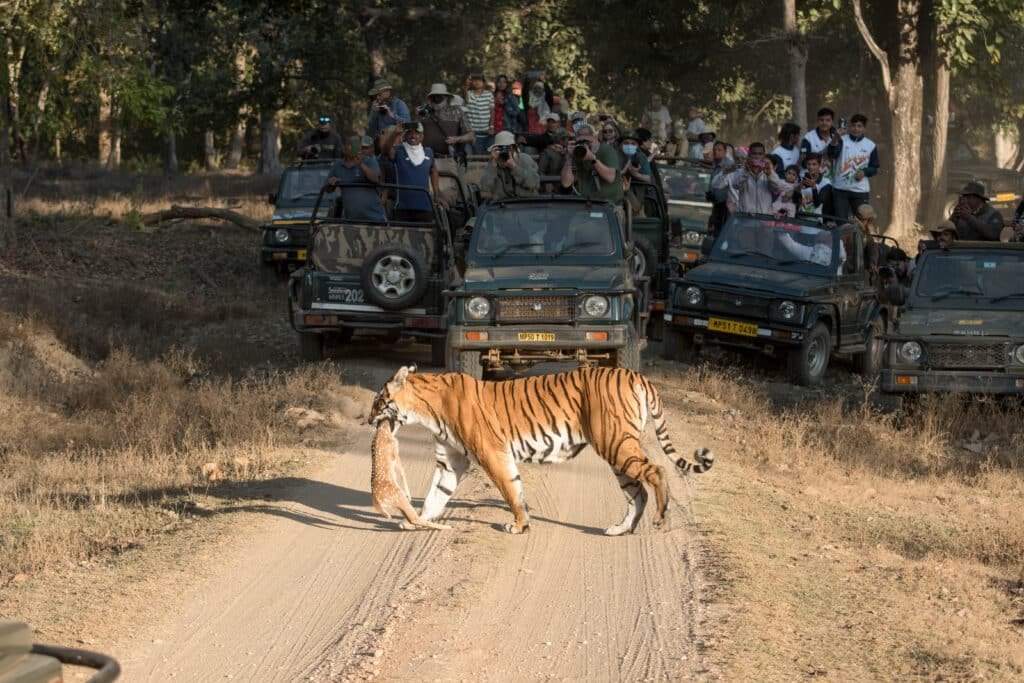
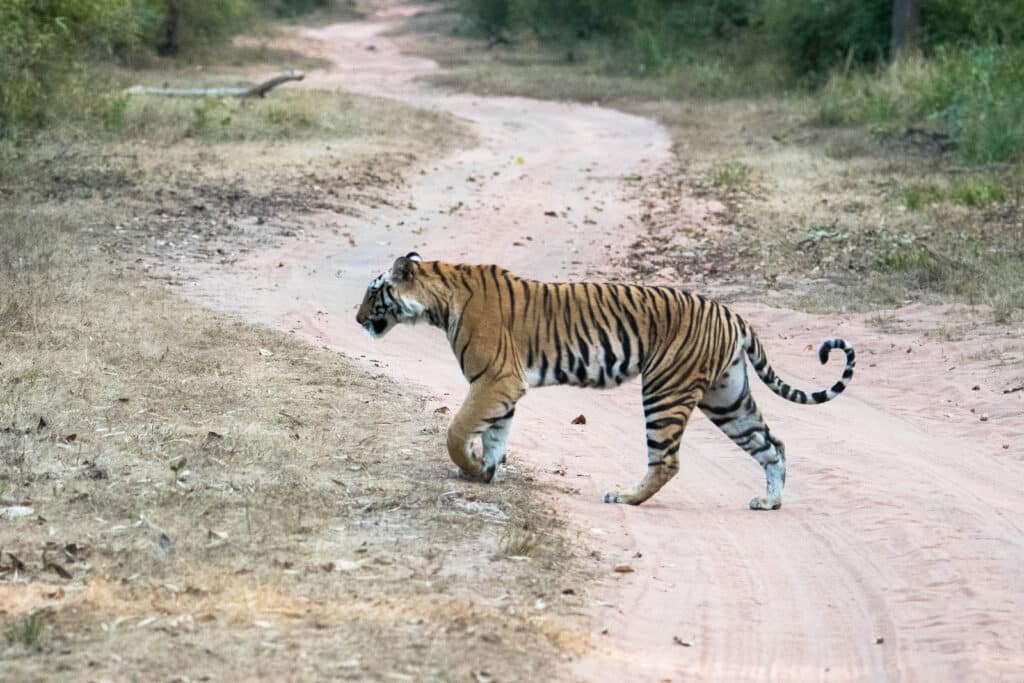
Yes, eyes are magnets, but the habitat is the melody, lead with tracks as leading lines, frame curves and S-bends and dare to go vertically when a tiger walks dead at vehicle to dial up its presence; it draws out tension.
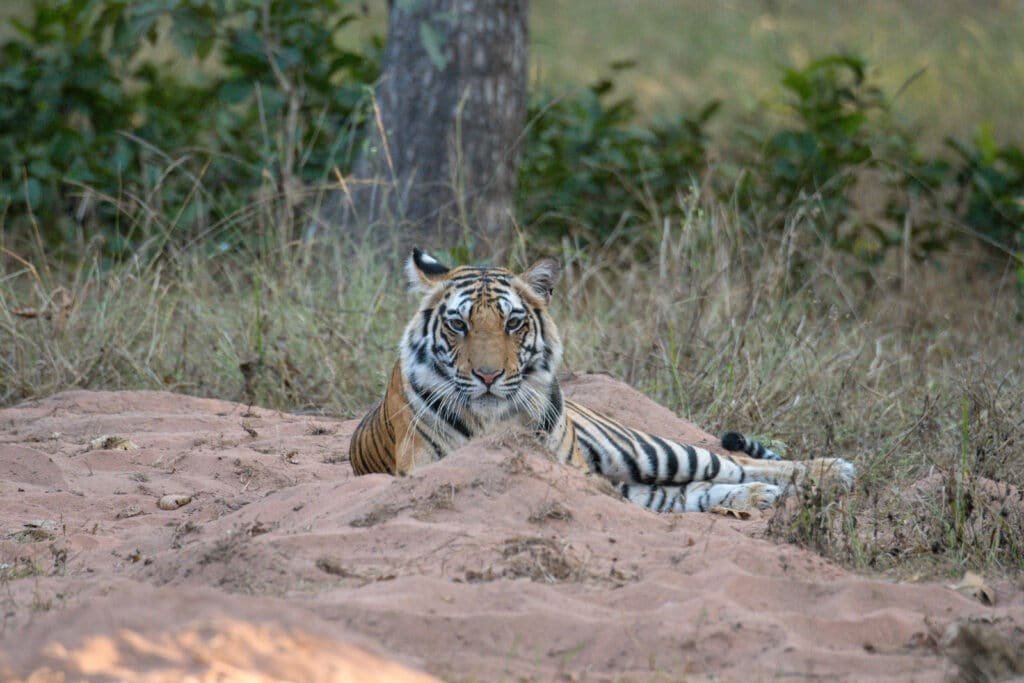
Watch the tail: clipping it at the frame’s edge is fatal to a shot’s rhythm, and a curled or raised tail can add character and balance in walking sequences where the stride gets fully stretched. Blend close-up portraits with environmental portraits to create a narrative grid like claws on a scent-mark tree, whiskers in fog, pug marks through dust, because a story is more than one face: it’s a place and a feeling.
Behavior is the blueprint
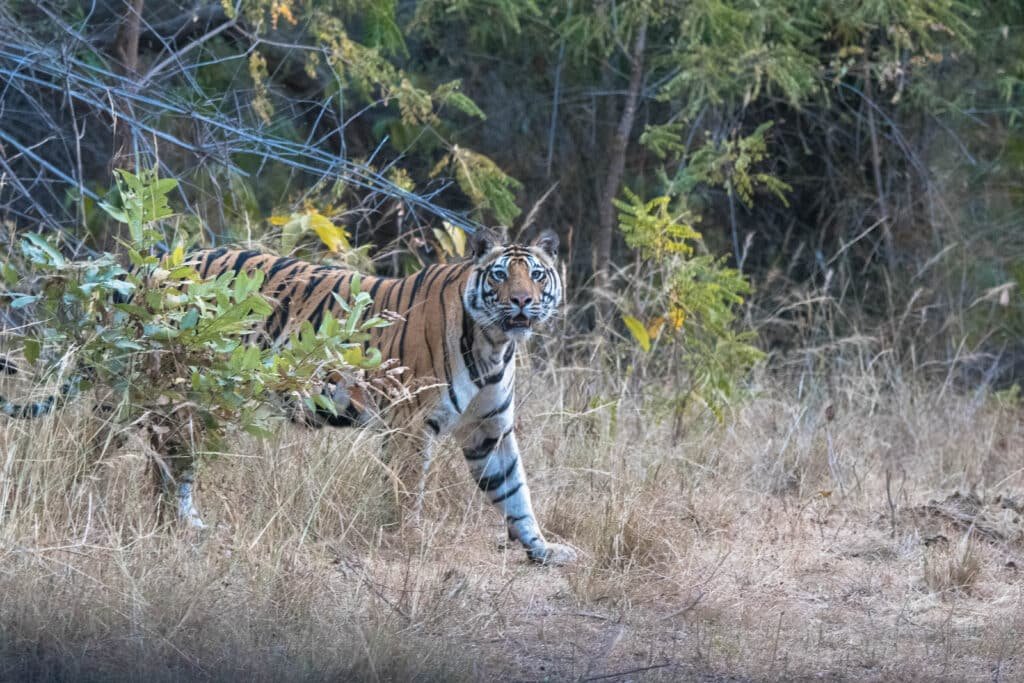
Tigers use forest tracks that also happen to be cooler and quieter with less thorns equally, they make for great photographic stages, so try and predetermine your autofocus points and exposure as you might anticipate a break at a junction, sniff of scent on the tree or pause at the sight of a culvert.
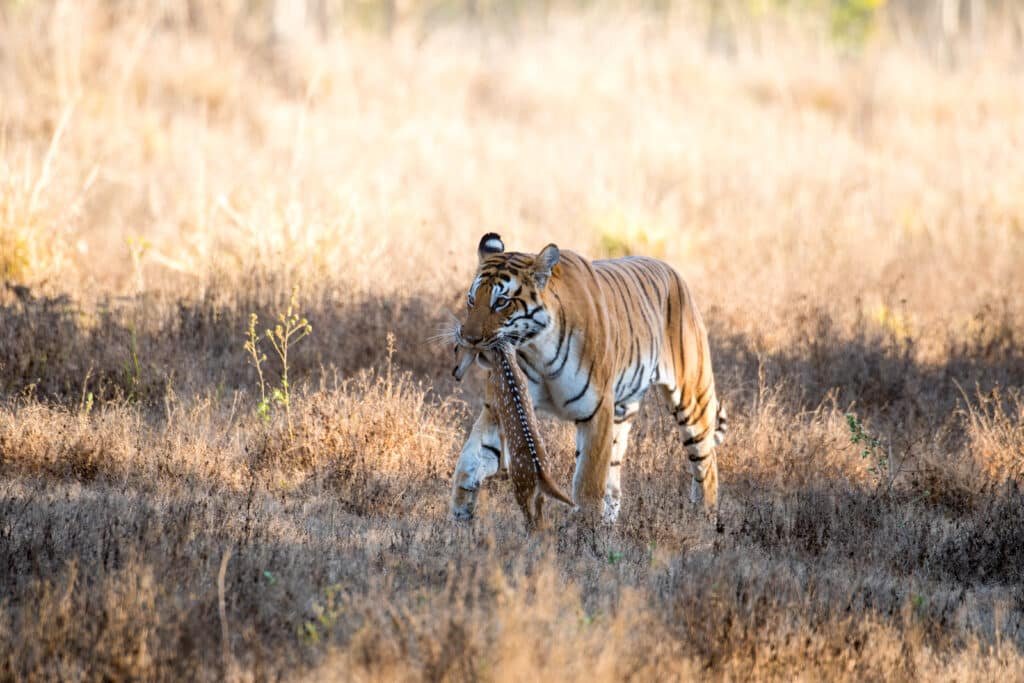
The best images are in the smallest gestures: ear angles that telegraph attention, tail twitches of mood, tongue flicks for a yawn, so keep burst mode at the ready but shoot in thoughtful explosions to capture peaks without slogging through frames. Predator-prey interactions are rare but possible; staying calm and pre-composed means when a sambar barks or langurs start hopping, the camera is already dialed, and the mind is already there.
Autofocus that doesn’t blink
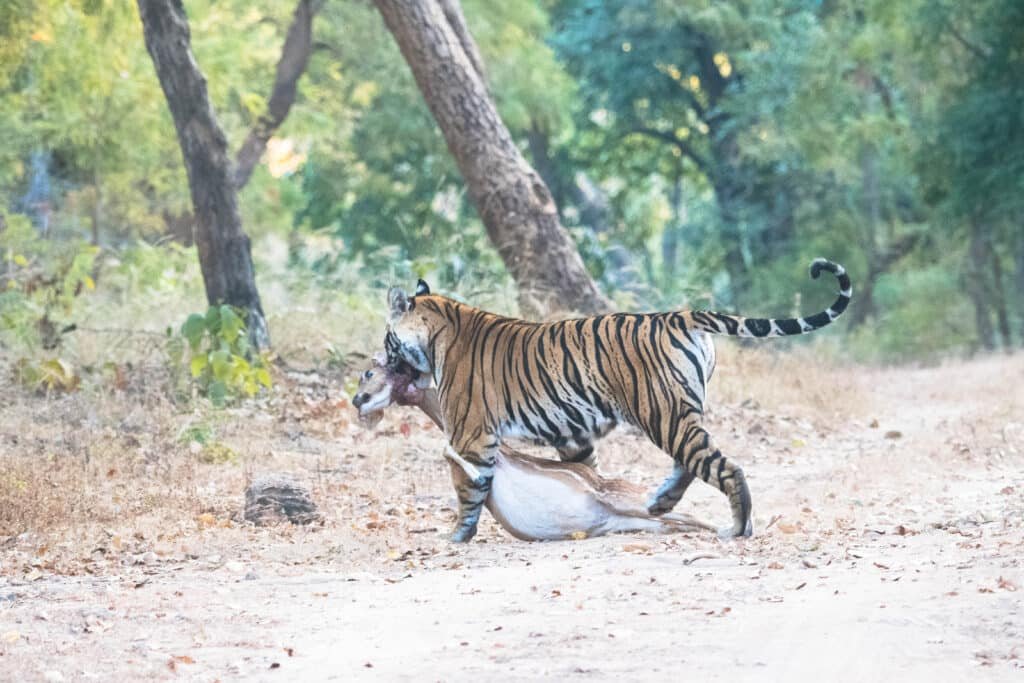
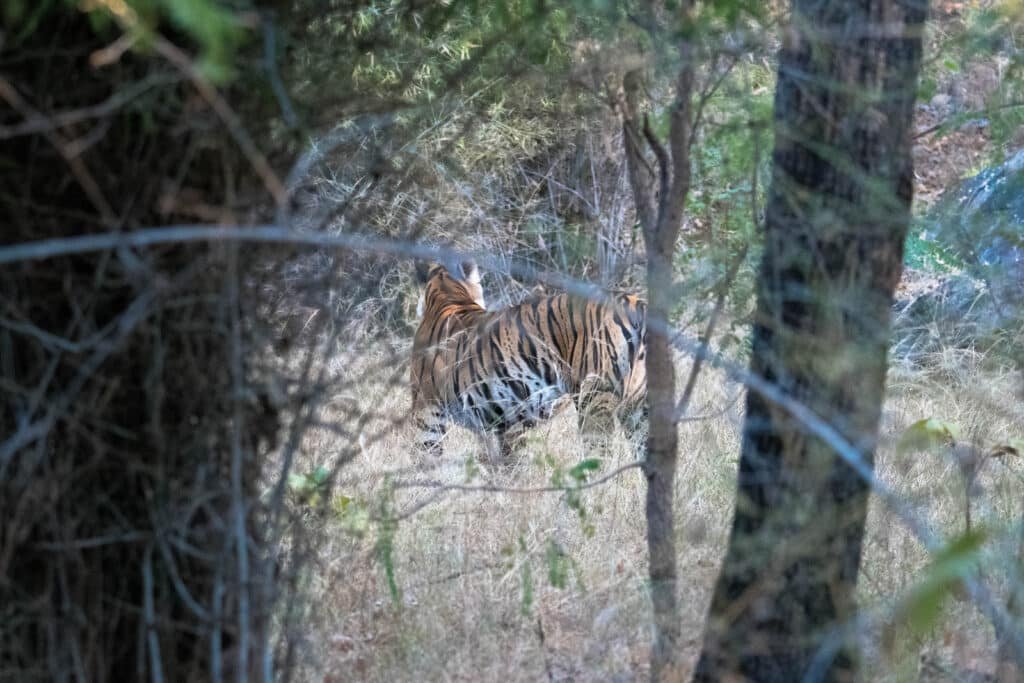
Use continuous autofocus with subject tracking, with a dot or small zone for clean eye focus and shifting points quickly as branches or grasses pop across the frame. When the tiger steps through brush, tighter autofocus area, and contrast priority with the mask markings around the eyes and nose; they often hold better than fur patches in mottled light. If the cat walks head-on, vertical framing helps keep the autofocus box on the face while preserving room for paws and tail. Nothing hurts more than a tack-sharp nose and an amputated tail tip.
Settings that adapt faster than the cat
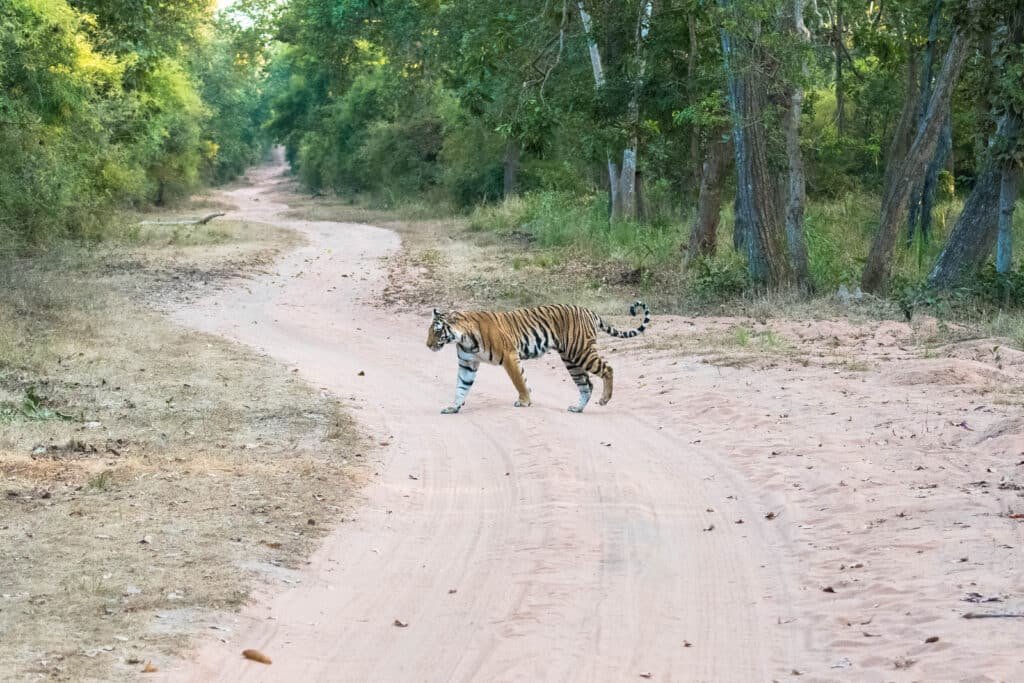
Adopt a default safari setup: 1/1000s, wide open, Auto ISO with an upper limit aligned to the camera’s acceptable noise floor, and exposure compensation ready to tame bright foreheads and chest markings. After a high-contrast scene, be sure to look at the histogram; Indian forests can change in seconds from dark shade to bright road, and recovering blown highlights on a tiger’s face is notoriously painful. Develop muscle memory for three modes – freeze action, walk-and-talk and creative pan, so the hands spin dials before the brain finishes the sentence, because the forest seldom waits.
Ethics that lengthen the sighting
Ethical photography isn’t a footnote; it’s the foundation for longer, quieter encounters; stay back, stay out of the way of pathways, no flash, and follow the park regulations so the tiger is in charge of the shot, and the tiger can relax at the sight of vehicles. Never bait or provoke; true wild behavior is the only story worth telling, and the audience can smell a staged picture from miles away, even if the algorithm can’t. Pick accountable operators, heed to your guide, and supporting conservation-led tourism keeps the habitat thriving; no forest, no photo, and that’s the beginning and end of the conversation.
Weather, dust, and the monsoon muse
Summer heat can create shimmer and haze over waterholes; get closer with longer glass and avoid heavy crops in post or use dehaze and clarity carefully if heat distortion sneaks in anyway. In the rain, carry proper covers, lean into soft light with wider apertures, and watch roads for reflective drama as raindrops turn whiskers into chandeliers and puddles into canvases. Dust is relentless in dry seasons: pre-cut covers, blower use at lodge, and periodic contact cleaning keep autofocus snappy when the tiger finally breaks cover at the bend.
Patience is a superpower, not a platitude
More drives equal better odds and concentrating days in one park compounds tracker knowledge and pattern recognition, guides start predicting routes, and suddenly chance looks a lot like experience. Plan travel during the drier months for higher sighting chances and cleaner visibility, especially April-June, while remembering that October-March offers lush backdrops and moody light that can be equally irresistible.
Embrace the quiet drives; a no-sighting morning can turn into an evening of lifetime frames, and perseverance like a tiger on a territory patrol, pays in tracks, not in shortcuts. These are a few handpicked insights from professionals that will ensure that you return with not just memories but with frames that preserve these memories within. As Seneca said “Luck is what happens when preparation meets opportunity”: be the lucky one with our guide and make sure your trip is worth every penny.